
Outsourcing has become a practical way for teams to manage growing workloads without stretching internal resources. Nevertheless, the moment data leaves your immediate control, new risks appear. Concerns about breaches, unauthorized access, or service interruptions stop companies from outsourcing, even when it could save time, money, and effort.
This blog helps you understand data security outsourcing, what to look for in a trustworthy partner, and how to protect sensitive information.
Understanding Data Security in Outsourcing
Before comparing partners, it helps to understand what strong data privacy and security in outsourcing actually involves. Outsourced security covers how your data is stored, processed, transferred, monitored, and eventually deleted.
“Security” is not a single feature; it’s a combination of technology, policy, and everyday discipline. Companies needing data protection outsourcing should look for providers that use layered controls rather than isolated tools. This means encryption, access management, endpoint monitoring, redundancy, frequent audits, and documented compliance.
What Goes Wrong Without Proper Data Security Outsourcing
- Financial fallout: Remediation, compensation, fines can quickly blow past millions.
- Regulatory exposure: Laws, such as HIPAA or GDPR, impose heavy penalties for leaks or non-compliance.
- Trust & brand damage: Customers rarely overlook data mishandling; reputational scars can last years.
- Operational disruption: Breaches lead to downtime, lost productivity, and potential shutdowns while issues are resolved.
Given these risks, any outsourcing plan should prioritize data privacy outsourcing and data protection compliance for outsourcing.
Why data security outsourcing should be a priority
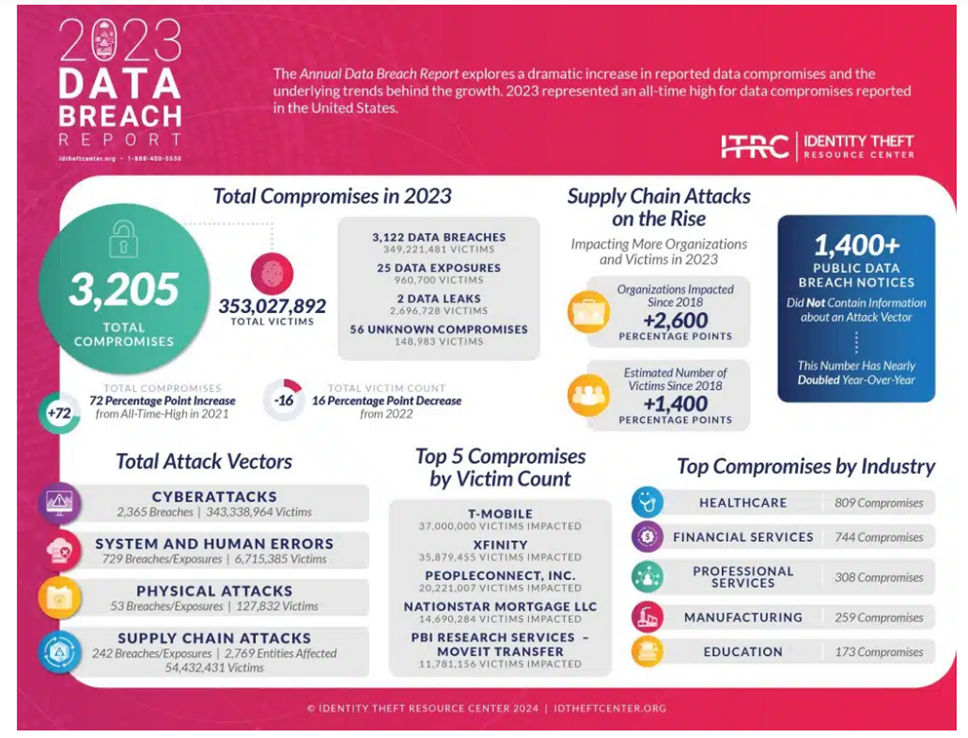
This topic deserves attention because the stakes have never been higher. Data breaches have increased by 78% between 2021 and 2023, according to the Identity Theft Research Center. IBM’s 2025 report shows the average data breach now costs $4.4 million globally — a record high. These numbers explain why businesses feel both pressure and hesitation around outsourcing.
Outsourcing can absolutely work when structured well. Providers like Data Entry Outsourced build their reputation on strong safeguards, documented workflows, and audited systems designed to protect clients at every step.
Why Reliable Outsourcing is Especially Critical for Your Industry
Each industry faces different risks, and understanding these risks helps you choose a partner with the right expertise. Healthcare teams worry about HIPAA compliance, legal firms demand tamper-proof chains of custody, e-commerce companies need real-time backups, and property managers handle sensitive personal and financial details every day.
| Industry | Key data security concerns | What a trustworthy partner must offer |
| Healthcare & MedTech | Breaches, leaks, insider threats | HIPAA compliance, audit logs, encrypted workflows |
| Legal services & law firms | Data loss, deletion, corruption | Version control, access restrictions, multi-layer backups |
| E-commerce & retail | Lack of backups or disaster recovery | Redundant storage, real-time monitoring, recovery protocols |
| Real estate & property management | Misuse of sensitive documents | Role-based access, secure sharing, confidentiality controls |
Because every vertical carries unique vulnerabilities, your outsourcing partner must have experience with your type of data. It is not enough to offer just encryption or compliance banners on a website, the provider should demonstrate both operational maturity and domain knowledge.
What to Look for in a Trusted Outsourcing Partner
Having identified these industry-specific risks, it becomes imperative to evaluate the critical capabilities and safeguards of a trusted outsourcing partner. These qualities enable effective mitigation of those risks.
A reliable provider takes a transparent, process-driven approach instead of vague assurances. That’s especially important when you’re considering data protection compliance for outsourcing, a topic many companies overlook until it’s too late.
1. Proven security frameworks
A trustworthy partner will rely on global standards such as ISO 27001, SOC 2 Type 2, or HIPAA (for relevant sectors). These frameworks ensure the provider has structured security policies, ongoing audits, and proper incident-response procedures.
2. Encryption across the lifecycle
Data should remain encrypted during transfer and at rest. Look for partners using AES-256 and TLS 1.2+. Encryption alone isn’t enough; key management must also be secure. Providers dealing with data privacy outsourcing should have clear statements about how keys are stored, rotated, and monitored.
3. Strong access controls
Role-based access control (RBAC) prevents unauthorized users from viewing sensitive files. Ask how access is granted, revoked, and monitored. Providers with weak RBAC often struggle with insider threats, which account for 83% of breaches (IBM 2024).
4. Disaster recovery & backups
Downtime can cause as much damage as a breach. Your outsourcing partner should run redundant servers, real-time backups, and quarterly disaster-recovery tests. This is relevant for companies concerned about data security in offshore outsourcing, where physical distance may complicate recovery.
5. A clear compliance roadmap
The best partners help you stay compliant rather than shifting responsibility onto your team. Look for documented SOPs, policy updates, and audit logs. This is valuable for firms needing rigorous data privacy and security in outsourcing.
Benefits of Choosing Data Entry Outsourced as Your Trusted Partner
A secure partner helps you organize processes, reduce overhead, and focus on core goals. Working with a trusted partner like Data Entry Outsourced (DEO) gives you access to specialized teams that handle high-volume projects with consistent quality. Rather than building costly internal systems, you get secure efficiency from day one.
Choosing DEO as your outsourcing partner brings practical advantages that protect your data and support your daily operations.
1. Strong security foundation: We deploy strict data security outsourcing measures like encryption and access controls to keep sensitive information protected.
2. Built-in compliance: You get support for HIPAA, GDPR, and other data protection compliance for outsourcing. You stay aligned with global standards without extra effort.
3. Cost-effective scalability: DEO helps reduce operational costs while maintaining high levels of data privacy outsourcing. This is ideal for teams looking to scale securely.
4. Reliable backup and recovery: You gain dependable disaster-recovery systems that prevent data loss, corruption, or downtime, regardless of workload size.
5. Full transparency: We offer clear audit trails and real-time visibility, making data protection outsourcing more accountable and easier to manage.
6. Flexible capacity: The teams expand or contract based on your volume, giving you predictable support during spikes without compromising data security offshore outsourcing.
7. Industry-specific handling: DEO customizes workflows for healthcare, legal, retail, and real estate, ensuring data privacy and security in outsourcing is always aligned with your industry’s risks.
Case study: How a global scientific instrumentation leader strengthened its decision-maker database with DEO
A Switzerland-based market leader in scientific instrumentation needed a trustworthy outsourcing partner. One who could safely handle sensitive industry data while building a dependable database of verified decision-makers.
The company chose Data Entry Outsourced because of its reputation for strong data security practices and cost-saving data entry outsourcing strategies. DEO deployed a 25-member data mining team with dedicated quality analysts, used secure workflows, screened every data point for accuracy, and ensured no outdated or unverified information entered the final dataset.
Results:
- 100% accurate, security-vetted decision-maker database
- Delivered on time within the 45-60 day commitment
- Clean datasets provided in both Excel and MS Access
- Enabled stronger marketing outreach and lead targeting
- 5+ years of continued partnership built on secure, high-quality delivery.
Conclusion
Selecting an outsourcing partner shouldn’t be rushed. Businesses across industries share one priority: protecting sensitive information while managing operations effectively. When you choose a partner that excels in data security outsourcing, you reduce risks and gain predictable, reliable outcomes.
A trustworthy provider, like DEO, supports compliance, transparency, and error-free work without adding complexity.
If you want to discuss your project or explore secure, compliance-ready processes, contact us. Our team will walk you through a customized approach that protects your data and supports your long-term goals.
Get Confidence, Compliance, and Cost Savings – All in One Partner
Start outsourcing with us and see why global brands rely on DEO for safe, compliant, and cost-efficient data handling.
Frequently Asked Questions
Q1. Why is data security important when outsourcing business processes?
Data security outsourcing is important because you’re trusting an external team with sensitive business information. Any gap in data security in outsourcing can lead to breaches, regulatory penalties, or damaged customer trust.
Q2. How do I choose an outsourcing partner that prioritizes data security?
A structured vetting process helps you spot risks early. ask for a recent security audit summary, review their infrastructure, check their incident-response plan, and confirm employee security training. Vendors specializing in data protection compliance for outsourcing, like DEO, make your operations safer and more predictable.
Q3. What security measures should an outsourcing provider use to protect sensitive data?
A trustworthy provider typically uses encrypted data transfer and secure VPNs, role-based access controls, and multi-factor authentication. Choosing a partner that does regular vulnerability checks and follows secure on-shore or offshore data security outsourcing protocols is crucial. Vendors with documented disaster-recovery and backup plans are crucial if your business operates in hazard-prone locations.
Q4. What are the biggest risks of outsourcing without a secure partner?
Poorly chosen outsourcing partners expose businesses to data leaks, unauthorized access, misuse of confidential information, and compliance violations. Such issues can lead to fines, lawsuits, and long-term loss of customer trust.
Q5. What type of data is most vulnerable in outsourcing arrangements?
Personally identifiable information, financial records, medical data, and legal documents are the most sensitive because they carry legal and ethical responsibilities. This is why data privacy and security in outsourcing requires a partner that understands high-risk workflows and uses strong safeguards.
 Prev
Prev